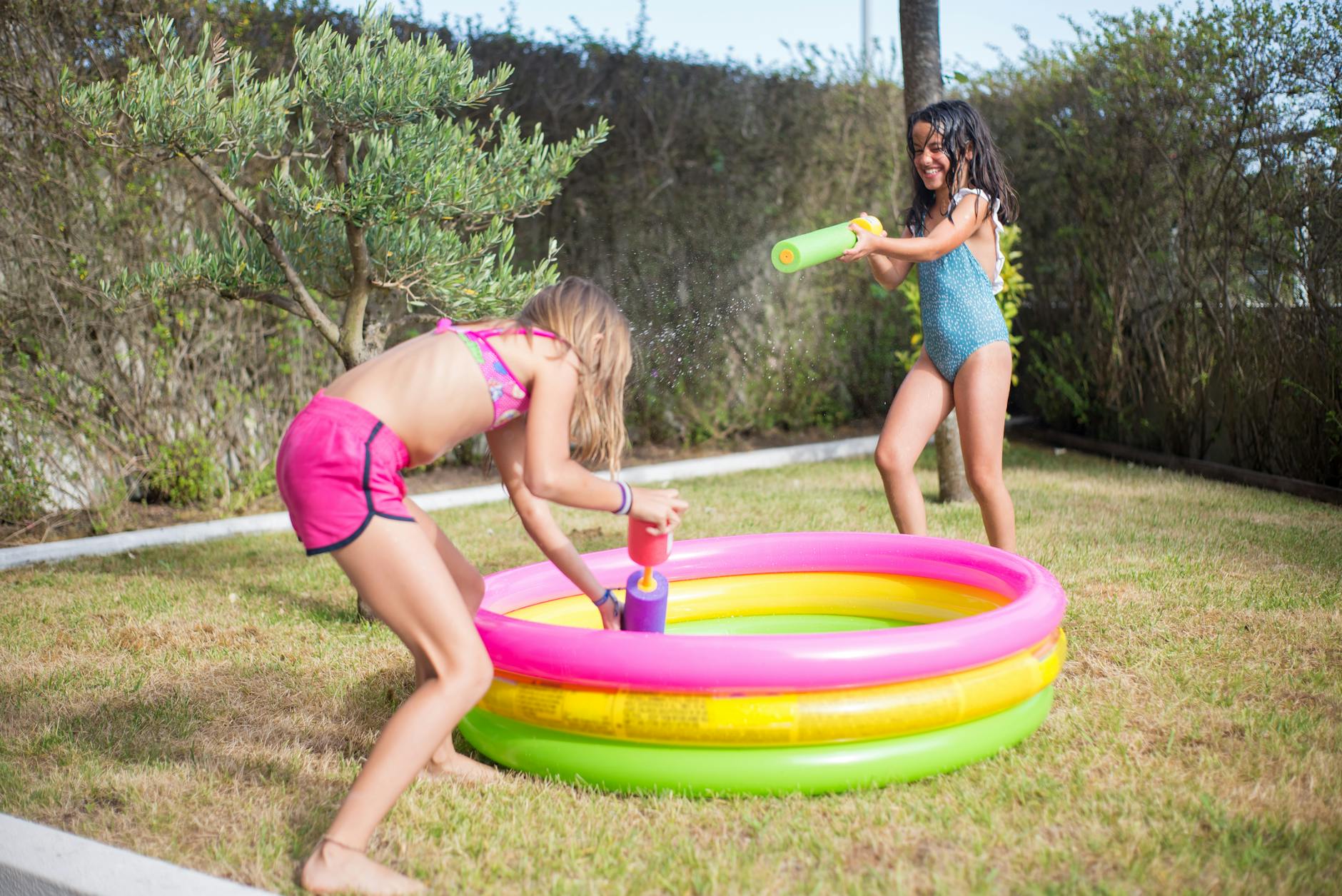
The pool toys that get kids genuinely excited to practice swimming are the ones that turn skill drills into a game — slow-sink dive toys that reward putting your face in the water, gliding underwater toys that pull kids into a kick, and floating splash toys that make breath control feel like an accident, not a lesson. We have tested these with our own kids and dozens of test families, and the same patterns hold across age groups. Formal swim lessons can cut drowning risk by up to 88% in kids ages 1-4, per a 2019 American Academy of Pediatrics policy review.
Quick Answer
The pool toys that get kids genuinely excited to practice swimming are the ones that turn skill drills into a game — slow-sink dive toys that reward putting your face in the water, gliding underwater toys that pull kids into a kick, and floating splash toys that make breath control feel like an accident, not a lesson. We have tested these with our own kids and dozens of test families, and the same patterns hold across age groups. Formal swim lessons can cut drowning risk by up to 88% in kids ages 1-4, per a 2019 American Academy of Pediatrics policy review.
Why Do Most Kids Resist Swim Practice?
Most kids resist swim practice because lessons feel repetitive, the feedback is delayed, and the social reward (playing with siblings or friends) is missing. A 5-year-old who happily splashes in the pool for 90 minutes will resist 20 minutes of formal kicking drills — same water, same kid, completely different motivation.
The fix is rarely more lessons. The fix is making the skill the byproduct of a game the child wants to play.
Different swim skills respond to different pool toys. Here is the breakdown of what to use for which skill, drawn from swim-instructor guidance and our product team’s pool-day observations.
| Swimming skill being built | Best pool toy type | Why it works |
|---|---|---|
| Breath control / face submersion | Dive rings, weighted pool toys | Kids forget they are holding their breath when they are chasing a target |
| Kicking technique | Pool balls, floating discs, kick boards | Forward propulsion makes legs the engine, automatically training kick rhythm |
| Confidence in deeper water | Underwater pool toys, sinkable balls | Reaching for a sinking object teaches “I can come back up” naturally |
| Mixed-age sibling play | Floating game sets, pool catch toys | Older and younger kids stay engaged at the same time, no one gets sidelined |
What Pool Toys Build Breath Control and Confidence Naturally?
We designed every Refresh Sports product around one question: will this get a family playing together in under a minute? That is why the Sticky Baseball Paddle Toss & Catch Game ($27.97) comes ready to play out of the box, the Aqua Flyer™ Water Splash Discs ($9.97) float so they never sink to the bottom of the pool, and the Mini Glider™ Foam Airplane ($9.39) flies far enough to make a 5-year-old sprint. Our full lineup — from the Mini-Toss Lacrosse® Set ($37.97) to the XL Beach Ball ($15.97) and Stringy Balls ($13.97) — is built for the real way families play: mixed ages, mixed skill levels, and about 45 minutes before someone needs a snack.
For breath control specifically, the toys that work share three traits:
- Slow descent — the child has time to commit to going under
- Visual reward — bright color visible against pool floor
- Reachable depth — toy lands at a depth matched to the swimmer’s level
The Aqua Dive Ball™ Underwater Pool Ball ($18.97) is engineered around exactly this — it sinks slow enough that a hesitant 5-year-old can ready themselves, and bright enough that it stays visible across a full pool length.
Which Pool Toys Help Kids Learn to Kick Properly?
Toys that pull a child forward — gliders, underwater fetch toys, and slow-sinking dive balls — teach kicking mechanics by giving the kick a purpose: catching the toy. Drills that ask a child to “kick harder” without a target rarely work. Drills that say “go get it” almost always do.
The GlideRay™ Underwater Glider Pool Toy ($19.97) is built for this exact moment. Launch it from the surface, watch it glide a few feet under, and the kid kicks to catch up. The kick mechanic that swim teachers spend three lessons on becomes natural in a single afternoon.
What Pool Toys Work for Mixed-Age Sibling Groups?
The hardest case is a 4-year-old and a 9-year-old in the same pool. Most toys skew to one age range. The toys that work for both share a common trait: easy to start, hard to master.
Top picks for sibling play:
- Aqua Flyer™ Water Splash Discs ($9.97) — younger kid throws, older kid catches; trade roles every round
- Aqua Hockey Water Game ($22.49) — competitive enough for older kids, simple enough for younger ones
- XL Beach Ball ($15.97) — group play, no skill gap, all ages
- Soft Stone Skippers® Water Skip Disc ($15.97) — older kids skip, younger kids retrieve
The mixed-age design means the older sibling is not bored and the younger one is not frustrated.
How Do You Build a Pool Practice Routine That Kids Actually Want to Repeat?
Three rules from our test families:
- Start with play, end with play. Drills go in the middle, never at the start.
- Pick one skill per session. Breath control today, kicking tomorrow. Not both.
- Keep the toys in rotation. Same three toys every time goes stale. Two favorites plus one new toy keeps it fresh.
A 30-minute pool session looks like this:
- 10 min — free water play with floating toys
- 10 min — skill round (dive ball or glider, depending on focus)
- 10 min — game-mode play (hockey, beach ball, or splash discs)
Kids ask to come back. Parents are not exhausted.
What Toys Should You Skip for Swim Practice?
Some toys actively work against the goal:
- Pool noodles for “lessons” — encourage flotation dependence
- Inflatable arm bands as toys — same flotation-dependence problem
- Hard-plastic dive rings — hurt hands and scrape pool floors
- Battery-powered swim toys — fail fast, expensive to replace
The best pool toys for kids are the ones that make the swim itself the reward.
What Happens When Practice Becomes a Game Kids Choose On Their Own?
Children who associate the pool with self-directed games rather than lessons show measurably better water confidence, longer breath holds, and faster skill acquisition than peers who only swim in formal lesson contexts. The American Academy of Pediatrics’ 2019 drowning prevention guidance highlights consistent water exposure paired with formal lessons as the strongest combination for safety outcomes.
The toy is the trojan horse. The skill is the prize.
References
- American Academy of Pediatrics. (2019). Prevention of Drowning. Pediatrics, 143(5).
- Centers for Disease Control and Prevention. Healthy Swimming Program. CDC.gov.
- Brenner, R. A., et al. (2009). Association between swimming lessons and drowning in childhood. Archives of Pediatrics & Adolescent Medicine, 163(3).
- For child development research behind active play, see raisingactivekids.com.
- For age-by-age pool toy buying guidance, see pooltoysguide.com.
- American Red Cross water safety guide
- CDC drowning prevention guidance