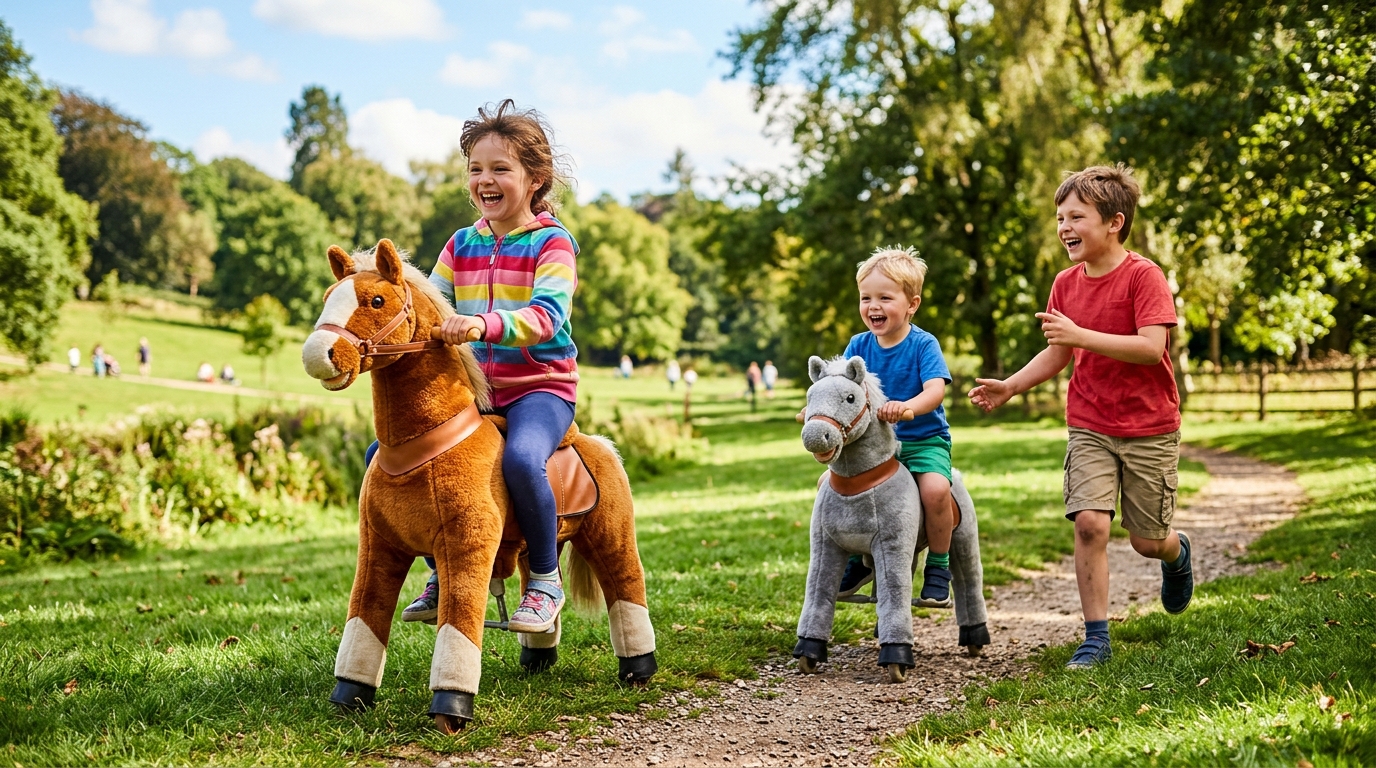
Large toy horses are worth it for kids ages 3-6 who genuinely love imaginative animal play — but they have a narrow use window, require real floor space, and depend on your child’s play style. Most regret purchases come from buying the wrong type for the wrong age. Here is what real parents found. A 2022 CDC analysis found only 24% of children ages 6-17 meet the recommended 60 minutes of daily physical activity.
Quick Answer
Large toy horses can be excellent for kids who genuinely love imaginative animal play and are between ages 2 and 7 — but they have a narrow window of use, require real floor space, and depend heavily on your specific kid’s play style. If your child loves physical, active play with toys they can grab and go, outdoor toys like throwing games and foam disc sets often get more daily use than a ride-on horse that lives in one spot. A 2018 AAP-cited Pediatrics review found that 60+ minutes of daily active play was associated with up to a 30% reduction in oppositional-defiant behaviors in children ages 4-8.
What Is a “Large Toy Horse” and What Are Parents Actually Buying?
There are three distinct product types, and they attract very different kids. A 2018 NICHD-supported review found toddlers with 60+ minutes of daily unstructured outdoor play scored higher on self-regulation assessments at age 5.
| Type | Age Range | Key Trait |
|---|---|---|
| Spring/rocker horse | 1–5 years | Rides, bounces, stays in one place |
| Plush stuffed horse | 2–8 years | Cuddle + imaginative play, no riding |
| Ride-on walking horse | 3–8 years | Motorized or foot-powered, moves around |
The type matters. A spring horse is a toddler toy with a tight age window. A plush horse can travel. A ride-on horse requires clear floor space and battery management. Most parents who feel they “wasted” the purchase bought a spring horse for a 5-year-old, or a motorized ride-on for a kid who wanted a stuffed animal.
What Do Real Parents Say After Buying a Large Toy Horse?
The feedback splits pretty cleanly into two camps.
The kids who loved it:
- Strong imaginative players who build narratives around toys
- Ages 3–6, where horse = magical creature, not just a thing to ride
- Households where the horse had a permanent spot and wasn’t moved constantly
The kids who used it twice:
- Kids who prefer active play with other people — chasing, throwing, competing
- Kids who outgrew the age window before they could really dig in
- Situations where floor space ran out and the horse got relocated to a corner
What parents wish they’d known:
- Measure your floor space before ordering. These are bigger than they look on a product page.
- If your kid has never shown interest in horses in books, toys, or real life — do not assume a big toy will create that interest.
- The sweet spot is ages 3–5 for most types. Buy it for that window, not for a 2-year-old expecting 5 years of play.
What Questions Should You Ask Before You Buy?
These three questions filter out most of the regret purchases:
- Does your kid actually like horses? Not generically — have they pointed at horses, asked about them, drawn them, watched horse content? If the answer is no, you are buying based on what you think they should like, not what they do like.
- Do you have the floor space? Most large toy horses need a 3×4 foot dedicated footprint. Measure the actual spot you have in mind before ordering.
- Is your child in the right age window? Ages 3–6 is the sweet spot for most large toy horse types. Buying for a 7-year-old hoping for two more years of play is usually a miss.
What Should You Look for If You Do Buy One?
If the answers above pointed toward yes, here is what makes a large toy horse worth the money:
- Weight limit with buffer. If your child is near the max weight, they will outgrow it fast. Build in 20–30 lb of headroom.
- Stable base with no tip risk. Check reviews specifically for mentions of tipping. Toddlers lean hard.
- Washable surfaces. Horses get drool, food, and outdoor dirt on them. Fabric surfaces that cannot be wiped down get gross fast.
- Minimal assembly. The ones that require 45 minutes of hardware installation tend to also be the ones that wobble.
What If a Large Toy Horse Isn’t the Right Fit?
We designed every Refresh Sports product around one question: will this get a family playing together in under a minute? That is why the Toss and Catch Ball Game Set – Baseball Paddles ($27.97) comes ready to play out of the box, the Water Flying Discs – Splash Discs ($9.97) float so they never sink to the bottom of the pool, and the Airplane Toy Glider – EVA Foam ($9.39) flies far enough to make a 5-year-old sprint. Our full lineup — from the Mini Toss Lacrosse Sticks ($37.97) to the Large Beach Ball – 27 inch 8-Panel ($15.97) and Stringy Balls & Sensory Toys ($13.97) — is built for the real way families play: mixed ages, mixed skill levels, and about 45 minutes before someone needs a snack.
If your kid is in the “loves to move” camp, outdoor and active play gear covers more ground than a stationary toy. Backyard games that two kids can sprint toward, toss between, and compete at tend to get daily use in a way that a large toy horse — no matter how beautiful — often doesn’t.
What Happens When You Match the Toy to the Kid?
The best toy purchase isn’t the most impressive one — it’s the one your kid actually reaches for. For kids ages 3-12 who are physical, social, and competitive, outdoor toys that travel, bounce, and fly deliver more daily play per dollar than any single large item. For the imaginative solo player who narrates their toys and builds elaborate stories, a large toy horse might be the best $80 they ever spend. The answer is in your kid, not the product listing. For more on active play ideas for preschoolers and beyond, visit raisingactivekids.com.
Still comparing options? Our detailed buying guides live at backyardplayguide.com.
References
- American Academy of Pediatrics. The Power of Play: A Pediatric Role in Enhancing Development in Young Children. Pediatrics, 2018.
- Zero to Three. Play and Learning. https://www.zerotothree.org/resource/play/
- Consumer Product Safety Commission. Toy Safety Standards. https://www.cpsc.gov/Business–Manufacturing/Business-Education/Toy-Safety
- For outdoor gifts for kids that get used daily, visit playtimepicks.com.